BPC-157 Reconstitution Calculator
Free BPC-157 reconstitution calculator. Enter vial size and bacteriostatic water volume to get the concentration per unit and total units per vial.
This calculator computes the concentration of BPC-157 solution when lyophilized powder is reconstituted with bacteriostatic water. Enter your vial size in milligrams and the volume of water you plan to add, and the tool returns the concentration per 0.1 ml draw so you know exactly how much peptide each syringe tick delivers.
How Reconstitution Math Works
The Formula
Concentration (mcg per 0.1 ml) = (peptide mg x 1000) / water ml x 0.1
The formula converts milligrams to micrograms (multiply by 1000), divides by the total volume of water to get micrograms per milliliter, then multiplies by 0.1 to give the amount of peptide in each 0.1 ml draw. That 0.1 ml corresponds to 10 units on a standard insulin syringe, which is the practical number you need for measuring consistent amounts.
Example Calculation
Take a 5 mg vial and add 2 ml of bacteriostatic water. 5 mg x 1000 = 5000 mcg total peptide. Divide by 2 ml = 2500 mcg per ml. Multiply by 0.1 and each 0.1 ml draw contains 250 mcg. If your protocol calls for 250 mcg, draw one tick. For 500 mcg, draw two ticks (0.2 ml).
Common Reconstitution Volumes
Pre-calculated concentrations for the most common vial and water combinations. All values assume complete dissolution with no material loss.
| Vial (mg) | Water (ml) | mcg per 0.1 ml | mcg per ml |
|---|---|---|---|
| 5 | 1 | 500 | 5000 |
| 5 | 2 | 250 | 2500 |
| 5 | 2.5 | 200 | 2000 |
| 10 | 1 | 1000 | 10000 |
| 10 | 2 | 500 | 5000 |
| 10 | 2.5 | 400 | 4000 |
| 10 | 5 | 200 | 2000 |
The 10 mg vial with 2 ml of water is the most popular combination among products on our BPC-157 for sale comparison. It produces 500 mcg per 0.1 ml, making common research amounts straightforward to measure.
What You Need
Gather all materials before starting. Work on a clean, flat surface.
- Lyophilized Peptide Vial
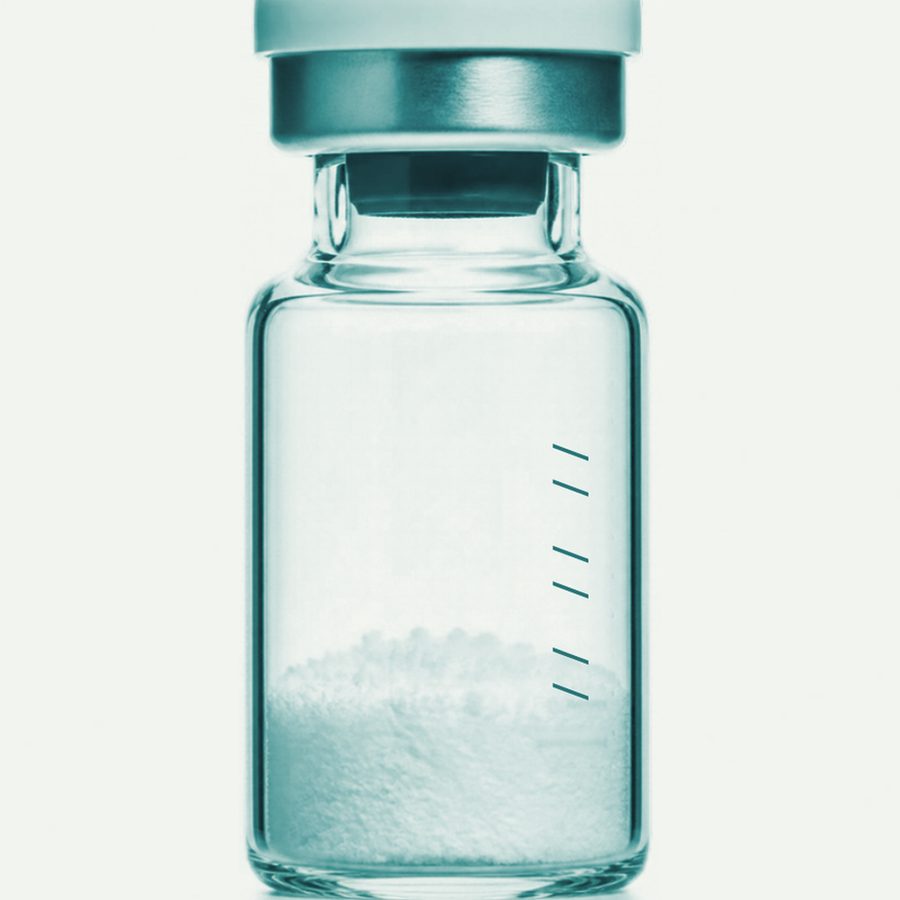
- The freeze-dried BPC-157 powder in a sealed glass vial
- Bacteriostatic Water
- USP-grade water with 0.9% benzyl alcohol preservative
- Insulin Syringe
- 1 ml syringe with 0.1 ml graduations for accurate measurement
- Alcohol Swabs
- For wiping vial stoppers before drawing
Real Peptides offers a 10 ml USP-grade vial for $4.80, which provides enough solvent for multiple reconstitutions depending on your dilution volume.
Step-by-Step Reconstitution
Standard aseptic technique applies regardless of vial size or vendor.
- Gather supplies. Lyophilized BPC-157 vial, bacteriostatic water vial, insulin syringe, and alcohol swabs. Lay everything out on a clean surface before you begin.
- Wipe stoppers. Swab the rubber stopper on both the peptide vial and the bacteriostatic water vial with a 70% isopropyl alcohol pad. Let each dry for 10 seconds before inserting a needle.
- Draw water. Insert the syringe into the bacteriostatic water vial and pull the desired volume. Refer to the calculator or the reference table to determine how much water matches your target concentration.
- Inject slowly along the wall. Insert the needle into the peptide vial at an angle and release the water down the inside wall of the glass. Do not spray directly onto the powder cake.
- Swirl gently. Tilt and rotate the vial in slow circular motions. Do not shake. The powder dissolves into a clear solution within 1-2 minutes.
- Label and refrigerate. Write the date, peptide name, and concentration on the vial. Store at 2-8C immediately.
Storage After Reconstitution
Reconstituted BPC-157 must be stored in a refrigerator at 2-8C (36-46F). The benzyl alcohol in bacteriostatic water slows microbial growth between draws, but it does not sterilize the solution permanently. Most vendors and research protocols recommend using the reconstituted vial within 3-4 weeks of the first puncture.
Do not freeze reconstituted solution. Freezing can cause the peptide to aggregate or degrade, producing cloudiness when thawed. If the solution appears anything other than clear and colorless, discard it. Unreconstituted lyophilized vials can be stored frozen at -20C for long-term preservation.
FAQ - BPC-157 Reconstitution
How much bacteriostatic water do I add to a 5 mg vial?
It depends on the concentration you want. Adding 1 ml produces 500 mcg per 0.1 ml. Adding 2 ml produces 250 mcg per 0.1 ml. Adding 2.5 ml produces 200 mcg per 0.1 ml. More water means a lower concentration per draw, which makes small amounts easier to measure but requires a larger draw volume for the same total peptide.
How much bacteriostatic water do I add to a 10 mg vial?
Common choices are 2 ml (500 mcg per 0.1 ml) or 2.5 ml (400 mcg per 0.1 ml). Using 1 ml creates a concentrated 1000 mcg per 0.1 ml solution that is harder to subdivide. Using 5 ml gives a dilute 200 mcg per 0.1 ml. Enter your values in the calculator above for any combination.
How long does reconstituted BPC-157 last?
When stored at 2-8C and reconstituted with bacteriostatic water, most vendors recommend using the solution within 28 days. The benzyl alcohol preservative inhibits bacterial growth but does not prevent peptide degradation indefinitely. Always inspect the solution before each draw and discard if cloudy or discolored.
Can I use sterile water instead of bacteriostatic water?
Sterile water works for single-draw use where the entire vial is consumed at once. It contains no preservative, so bacteria can grow after the first puncture. For multi-dose vials drawn from over days or weeks, bacteriostatic water is the correct choice because its 0.9% benzyl alcohol keeps the solution usable between draws.
What happens if I add too much water?
The total peptide in the vial stays the same regardless of water volume. More water simply lowers the concentration, meaning you draw a larger volume to get the same amount. Very dilute solutions may require draws that exceed the capacity of a 1 ml syringe. If you accidentally add too much water, recalculate using the tool above and adjust your draw volume. The peptide itself is not damaged by extra water.
Compare the current picks
Prices, sizes and ratings side by side, updated when the merchant pages change.
Shop BPC-157