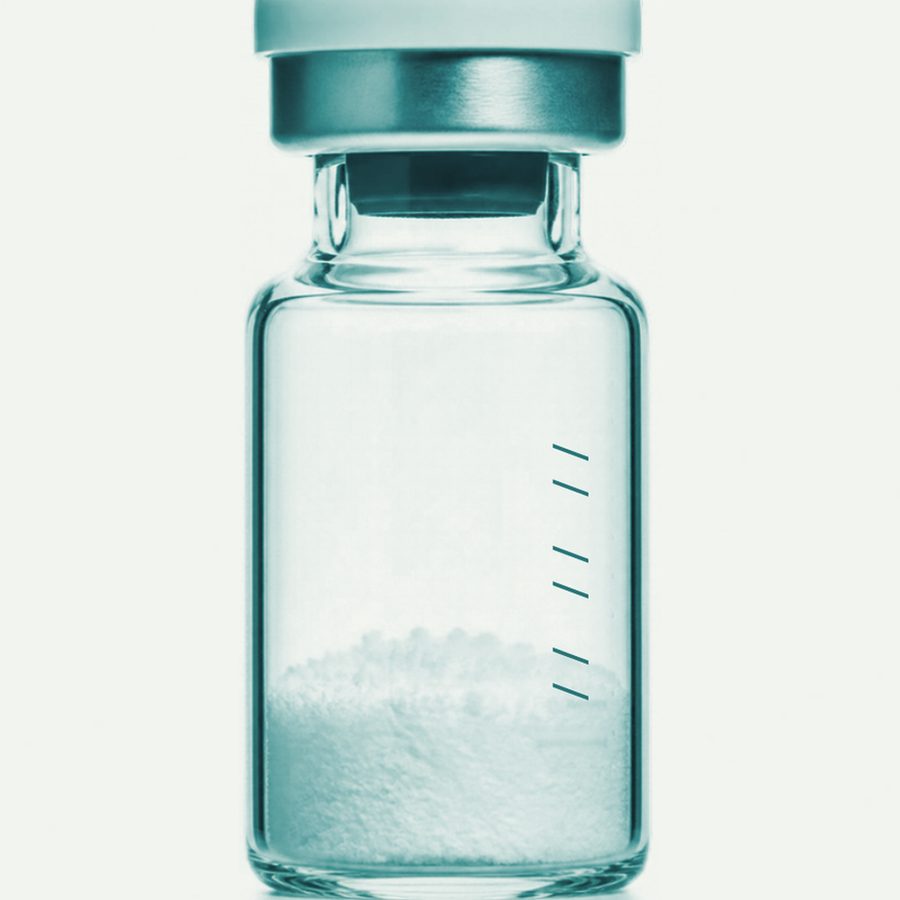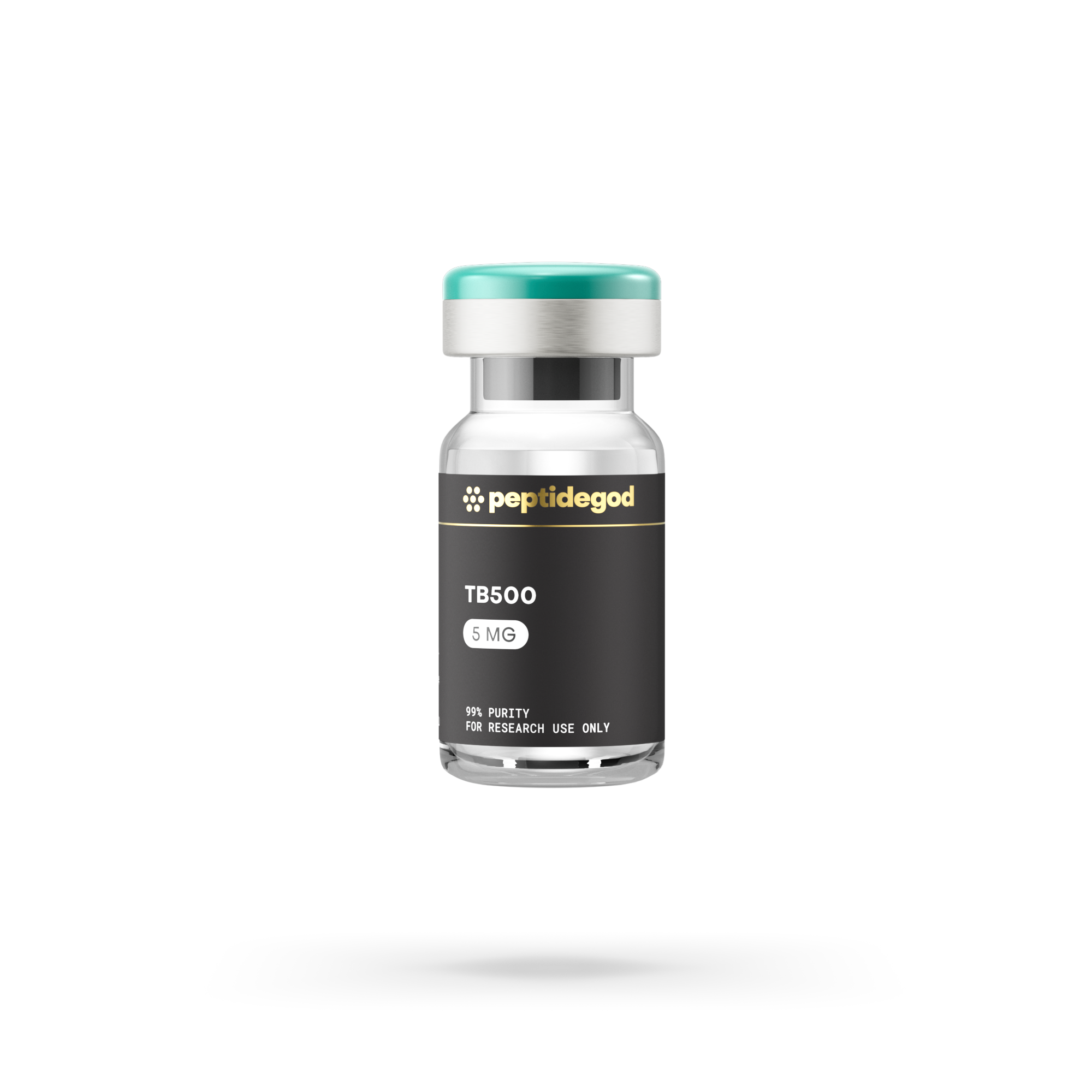
Standalone TB500 (thymosin beta-4 fragment) vial, lyophilized. 5 mg at $35.00 or 10 mg at $65.00.
Peptide God TB500 Review: Price, Size and COA Status
Peptide God TB500 reviewed. 5 mg at $35.00, 10 mg at $65.00. No published COA. Our editorial rating and what to consider before ordering.
Key Features
- Sizes: 5mg ($35.00) and 10mg ($65.00)
- Cost per mg: $7.00/mg (5mg) or $6.50/mg (10mg)
- Form: Lyophilized powder
- Public COA: None listed
- Customer reviews: None
The pricing is close to the BPC-157 listing from the same vendor, which sits at $6.99/mg for 5mg and $6.00/mg for 10mg. Peptide God appears to use a consistent pricing strategy across its single-peptide products.
What's Inside
- Peptide: TB500 (synthetic thymosin beta-4 fragment)
- Form: Lyophilized powder requiring reconstitution with bacteriostatic water
No HPLC purity percentage, no endotoxin levels, and no lab references appear on the listing. The product page does not specify the amino acid sequence or molecular weight. Without a COA, independent confirmation of peptide identity or contamination levels from the listing information alone is not possible.
- Product
- TB500 by Peptide God
- 5mg Price
- $35.00 ($7.00/mg)
- 10mg Price
- $65.00 ($6.50/mg)
- Form
- Lyophilized Powder
- Public COA
- None
- Customer Reviews
- None
- Editor Rating
- 3.8 / 5
How to Store and Handle
Keep the sealed vial at -20C for long-term storage. A standard refrigerator (2-8C) works for short-term holding over a couple of weeks. The lyophilized powder can tolerate room temperature during shipping but should be moved to cold storage as soon as it arrives.
Reconstitute by drawing bacteriostatic water into an insulin syringe and injecting it gently against the inner wall of the vial. Let the powder dissolve without shaking or agitation. Clean the rubber stopper with an alcohol wipe before each puncture. The reconstituted solution belongs in the 2-8C range and should be used within 28 days. Do not freeze after reconstitution.
TB500 by Peptide God is a lyophilized powder available in 5mg ($35.00) and 10mg ($65.00) vials. This is a standalone thymosin beta-4 fragment, separate from the BPC-157 + TB500 blend that the same vendor carries. No COA is published on the product page and no customer reviews are listed. We reviewed the listing details and compared the pricing against other products in our database.
Overview
TB500 is a synthetic peptide modeled after a segment of thymosin beta-4, a protein involved in cell migration, blood vessel formation, and tissue repair pathways in preclinical models. Animal studies have investigated its role in wound healing and inflammatory response. No human clinical trials have been completed, and TB500 is not approved for therapeutic use in any jurisdiction we are aware of.
Peptide God sells this as a single-compound vial in freeze-dried form. The 5mg vial runs $7.00 per milligram. Stepping up to the 10mg vial brings the cost down to $6.50 per milligram. Both prices land in a competitive range for TB500 on the US market, though comparisons are harder to make when a vendor does not share purity data.
Our Verdict
We gave Peptide God TB500 a rating of 3.8 out of 5. Sub-scores: Testing 3.5, Purity 4.0, Labeling 3.5, Value 4.2. The value score reflects competitive per-milligram pricing that sits in the lower half of the market for TB500. Both vial sizes are reasonably priced for what is offered.
The documentation shortfall pulls down the overall score. No COA, no stated purity, and no customer feedback mean there is limited external validation of what is in the vial. Researchers who need confirmed peptide identity and purity specifications should weigh that gap against the price advantage. For those working with TB500 alongside Peptide God's BPC-157 products, ordering from a single vendor simplifies logistics. But we would still prefer to see analytical data published on the page.
Our rating
Standalone TB500 (thymosin beta-4 fragment) vial, lyophilized. 5 mg at $35.00 or 10 mg at $65.00.
FAQ
Does Peptide God publish a COA for TB500?
No. The product page does not include a Certificate of Analysis, lab name, or analytical results. This is consistent with other Peptide God listings. The testing sub-score of 3.5 reflects the missing documentation.
What is the difference between TB500 and the BPC-157 + TB500 blend?
This is a standalone TB500 vial containing only one peptide. The blend product from the same vendor combines BPC-157 and TB500 in a single vial at a fixed ratio. Buying standalone vials lets you control the amount of each compound independently, which the blend does not allow.
Which vial size is the better deal?
The 10mg vial at $6.50 per milligram saves $0.50 per milligram compared to the 5mg at $7.00/mg. Over a 10mg purchase, that difference adds up to $5.00. The larger vial is the more economical choice for researchers who know they will use the full amount.
How does this compare to TB500 from other vendors?
Peptide God's TB500 pricing is competitive on a per-milligram basis. However, some competing vendors include COAs, stated HPLC purity, and endotoxin data at a higher price point. The choice comes down to whether you prioritize cost or documented analytical verification.